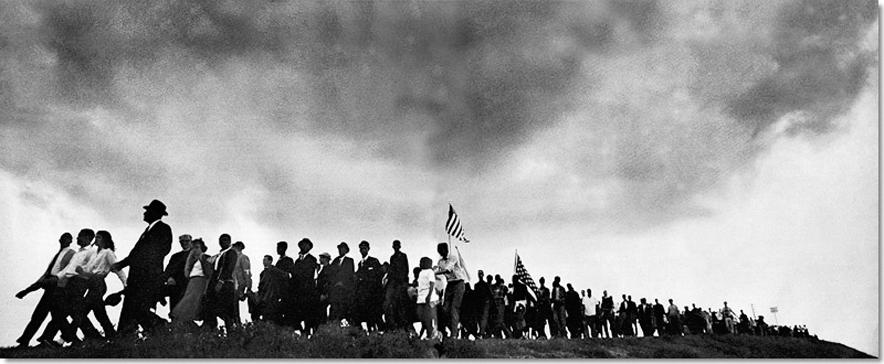
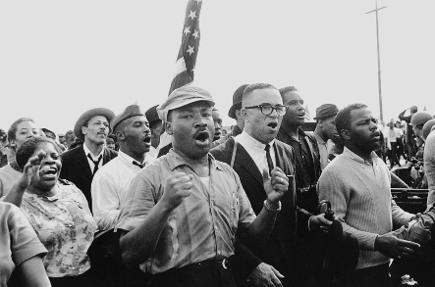
On 25 March 1965, Martin Luther King led thousands of nonviolent demonstrators to the steps of the capitol in Montgomery, Alabama, after a 5-day, 54-mile march from Selma, Alabama, where local African Americans, the Student Nonviolent Coordinating Committee (SNCC) and the Southern Christian Leadership Conference (SCLC) had been campaigning for voting rights. King told the assembled crowd: ‘‘There never was a moment in American history more honorable and more inspiring than the pilgrimage of clergymen and laymen of every race and faith pouring into Selma to face danger at the side of its embattled Negroes’’ (King, ‘‘Address at the Conclusion of the Selma to Montgomery March,’’
Organizations United For a Purpose!
SNCC
The Student Non-Violent Coordinating Committee (SNCC), formed to give younger blacks more of a voice in the civil rights movement, became one of the movement’s more radical branches. In the wake of the early sit-ins at lunch counters closed to blacks, which started in February 1960 in Greensboro, North Carolina, Ella Baker, then director of the Southern Christian Leadership Conference (SCLC), helped set up the first meeting of what became SNCC. She was concerned that SCLC, led by the Reverend Dr. Martin Luther King, Jr., was out of touch with younger blacks who wanted the movement to make faster progress. Baker encouraged those who formed SNCC to look beyond integration to broader social change and to view King’s principle of nonviolence more as a political tactic than as a way of life.
http://www.history.com/topics/black-history/sncc
SCLC
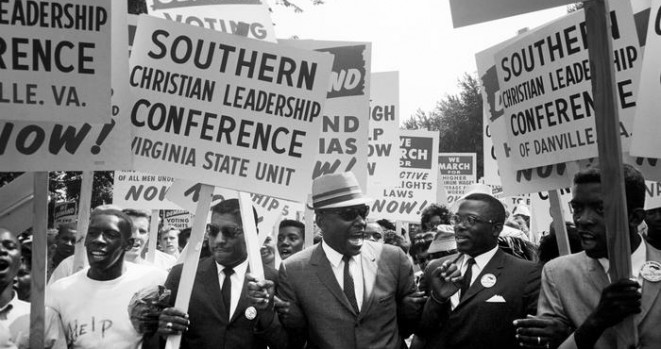
The very beginnings of the Southern Christian Leadership Conference can be traced back to the Montgomery Bus Boycott. The Montgomery Bus Boycott began on December 5, 1955 after Rosa Parks was arrested for refusing to give up her seat to a white man on the bus. The boycott lasted for 381 days and ended on December 21, 1956, with the desegregation of the Montgomery bus system. The boycott was carried out by the newly established Montgomery Improvement Association (MIA). Martin Luther King, Jr. served as President and Ralph David Abernathy served as Program Director. It was one of history’s most dramatic and massive nonviolent protests, stunning the nation and the world.
http://sclcnational.org/our-history/
Voting Rights Act
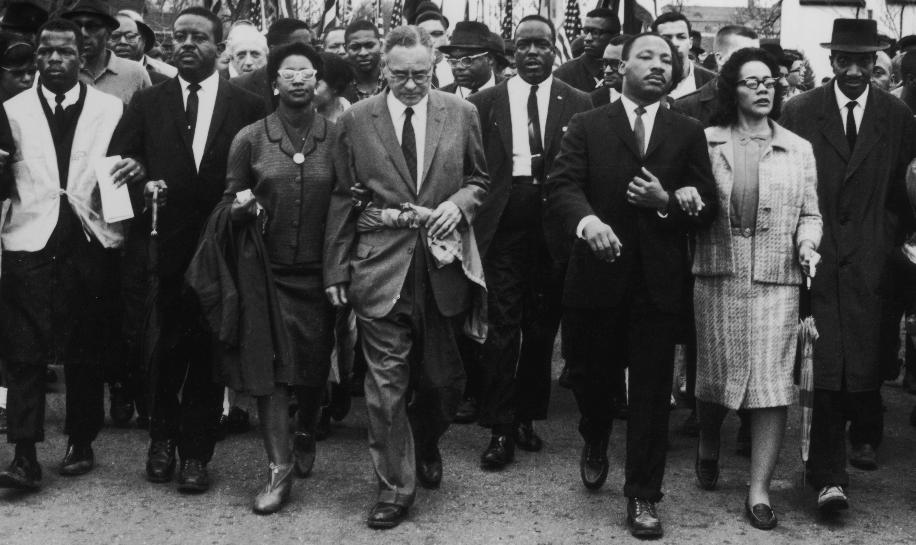
On March 17, 1965, even as the Selma-to-Montgomery marchers fought for the right to carry out their protest, President Lyndon Johnson addressed a joint session of Congress, calling for federal voting rights legislation to protect African Americans from barriers that prevented them from voting. That August, Congress passed the Voting Rights Act, which guaranteed the right to vote (first awarded by the 15th Amendment) to all African Americans. Specifically, the act banned literacy tests as a requirement for voting, mandated federal oversight of voter registration in areas where tests had previously been used, and gave the U.S. attorney general the duty of challenging the use of poll taxes for state and local elections.
Along with the Civil Rights Act, the Voting Rights Act was one of the most expansive pieces of civil rights legislation in American history. Its effects greatly reduced the disparity between black and white voters in the U.S. and allowed a greater number of African Americans to enter political life at the local, state and national level.
Marchers
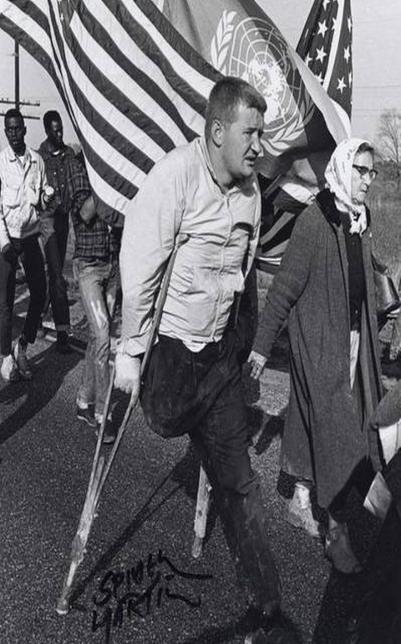
Jim Letherer completed the entire 54 mile march to Montgomery on crutches. "He walked all the way on one leg. Courage." -Spider Martin
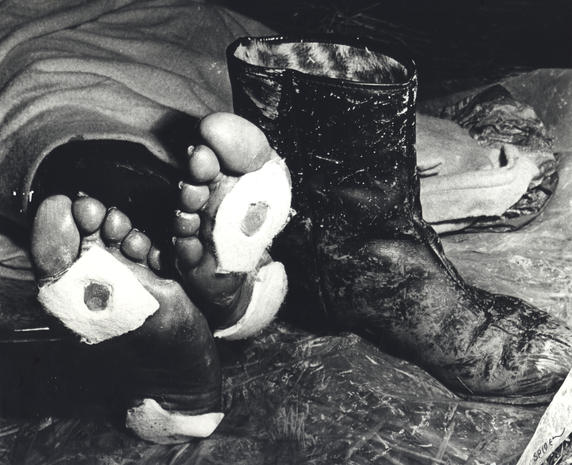
"My feet is tired but my soul is rested."
"This woman was asleep, camped on the side of the road after a day of marching. She was so tired, my flash didn't wake her." -Spider Martin
March On!
After Bloody Sunday, King himself led another attempt on March 9, but turned the marchers around when state troopers again blocked the road. That night, a group of segregationists beat another protester, the young white minister James Reeb, to death. Alabama state officials tried to prevent the march from going forward, but a U.S. district court judge ordered them to permit it. President Lyndon Johnson also backed the marchers, going on national television to pledge his support and lobby for passage of new voting rights legislation he was introducing in Congress. Some 2,000 people set out from Selma on March 21, protected by U.S. Army troops and Alabama National Guard forces that Johnson had ordered under federal control. After walking some 12 hours a day and sleeping in fields along the way, they reached Montgomery on March 25.
Nearly 50,000 supporters–black and white–met the marchers in Montgomery, where they gathered in front of the state capitol to hear King and other speakers... address the crowd. “No tide of racism can stop us,” King proclaimed from the building’s steps, as viewers from around the world watched the historic moment on television.
Source: History.com

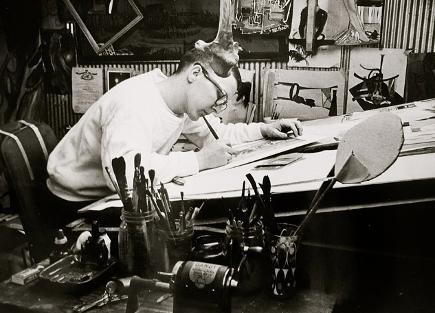
"Spider, we could have marched, we could have protested forever, but if it weren't for guys like you, it would have been for nothing. The whole world saw your pictures. That's why the Voting Rights Act was passed." -MLK
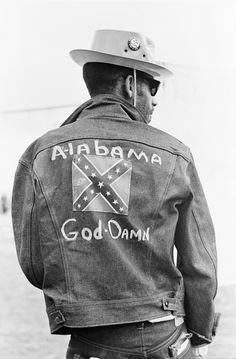
"After I made this picture I asked this marcher what Alabama God-Damn meant? He said it meant, 'Lord, these people have enslaved people for 400 years, damn them.'" -Spider Martin
